Surrendering to the Charms of Flensburg

When I wrote the chapter about Flensburg, Germany, in The Holy Diamond, I did so without having ever visited the city.  I knew almost nothing about it, other than that the post-Hitler Nazi government led by Karl Doenitz and Albert Speer had been set up there and then arrested and disbanded soon after by the Allies.  I selected the city as one of the chapters of my novel because I wanted to incorporate this final chapter of the Third Reich and because I wanted to write about a smaller town or city in Germany that few knew about. 
 Image

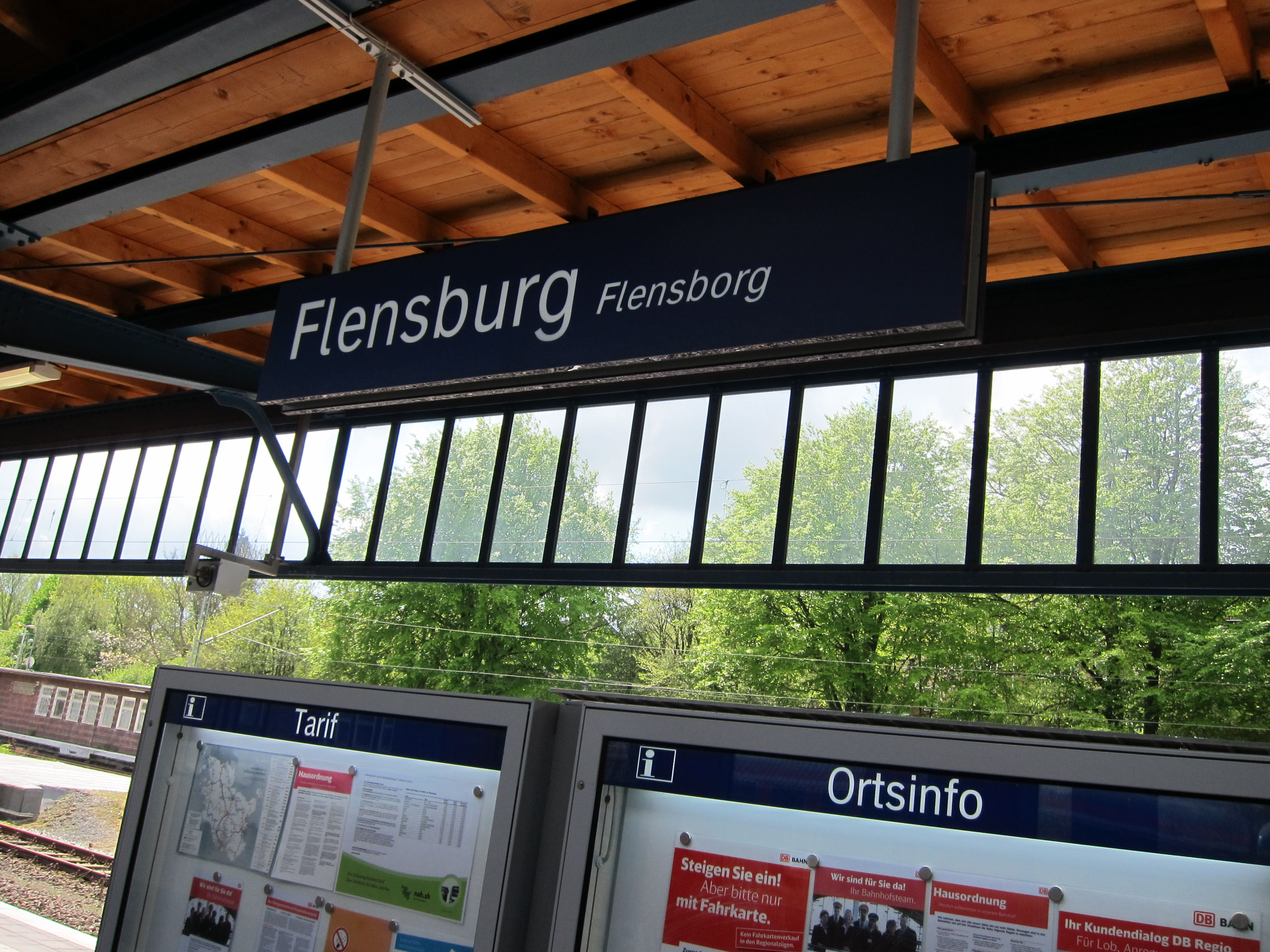
Flensburg Train station sign (Photo: LH Dooley)

I visited Flensburg after completing the novel, and had two misconceptions corrected.  First, while the city is within walking distance of Denmark (okay, it may be a long walk of more than 30 minutes, but the local bus from Flensburg train station ends its route in Denmark) it is nowhere near Hamburg.  It’s a good two hours from the Hanseatic city (as Hamburg is often referred to) on a slow, winding train that passes through flatlands dominated by farms and pastures.  Fortunately, Flensburg’s distance from Hamburg is not a critical plot element in The Holy Diamond and I had not suggested that they are any closer together than actuality.

My second misconception was that Flensburg was a dull, quiet town – little more than a village – that time had forgotten but for the end of the Second World War.  This perception was based on the fairly sparse information and photos I found on the internet about the city, which mostly showed the same half dozen photos of the old port.

 Image

Flensburg Pedestrian Street, Holmen (Photo: LH Dooley) 

My surprise, then, was enormous when I visited the city one sunny May day and was greeted by a small, bustling city with a long (perhaps one kilometer), shop-filled pedestrian street; timber-framed buildings (albeit sporadic); charming courtyards filled with boutiques and shops; up to one hundred sailboats including multi-mast, old style tall sailing ships; churches, and a scenic overlook.  The city was humming on a weekday with shoppers, café-loungers, and even a few tourists.  I had begun my visit by walking along both sides of the harbor, seeing just a few empty cafes and restaurants but enjoying the fresh, sea air.  It was only an hour or so later that I discovered the actual center which was just a street up (west) from the water.

The Starbucks-like café that Hans and his friends meet in Flensburg is fabricated; but the location is real.  The corner on Willy Brandt Platz that my fictional coffee shop is located is occupied by a restaurant, which itself was blocked by a construction site on the square.

 Image

A view of the port area, with the old Flensburg city center behind. (Photo: LH Dooley)

My final observation is that, sadly, the city makes poor use of its beautiful port.  There are few restaurants along either side; and those that are there were empty or literally abandoned – boarded up as if they were in need of appearing in a novel to resurrect them.  Lastly, there was not one sign, photo, or plaque indicating that the war had ended in this otherwise unknown border city.  Nothing about Karl Doenitz going from President to Prisoner in a day; or Albert Speer’s latest drama that would later go into his best-selling autobiography.  Fortunately thanks to history books and novels like The Holy Diamond (yes, this is a cheap pitch for my book), Flensburg is still remembered for May 1945 and the end of the Thousand Year Reich.

 

Posted in Uncategorized | Tagged , , | 1 Comment

Paperback Production

The Holy Diamond will be published simultaneously in e-book (probably exclusive on amazon, through Kindle Direct Publishing Select); and paperback via CreateSpace.

This is all a bit of a new process for me, but I’m happy to share a bit about the process.

Basically, I have hired a very skilled and experienced person to format my novel so that it looks like a real novel. What does that mean? Well I did not know until now, but it includes:

  • headers, varying by odd and even pages between author name (me) and book title (you can guess what it is);
  • fonts
  • line spacing
  • consolidating my different files (acknowledgements, dedication, text, biography, etc.)

She has done a great job, and I look forward to seeing the next step. What is the next step?

I have submitted the proof of the cover and the novel text in PDF to CreateSpace. CreateSpace will review and approve my submittal. After that, I think, they send me a sample for my approval or to make changes. Then I should more or less be ready for printing.

Ironically, while the e-book is ready to go almost now, it is the paperback that adds weeks to the publication process. But I would rather have everything ready at once, than in steps.

Here is a CreateSpace page where I did some of the setup.

Image

So now I wait!

Posted in Uncategorized | Tagged , , , , | Leave a comment

The Vatican Museums

While the history of the relic that I call the Holy Diamond begins in Jerusalem, the novel The Holy Diamond begins in the Vatican Museums – an enormously rich collection of paintings, sculptures, furnishings, monastic books, and liturgical items spanning the entire history of the Catholic Church.  It is here where we meet two of the main characters, German history student Franz Huber and Italian tenor student Enrico Vespacio, where they first visit the Sistine Chapel and then have their first encounter with the Teutonic Knights of the Aryan Order.

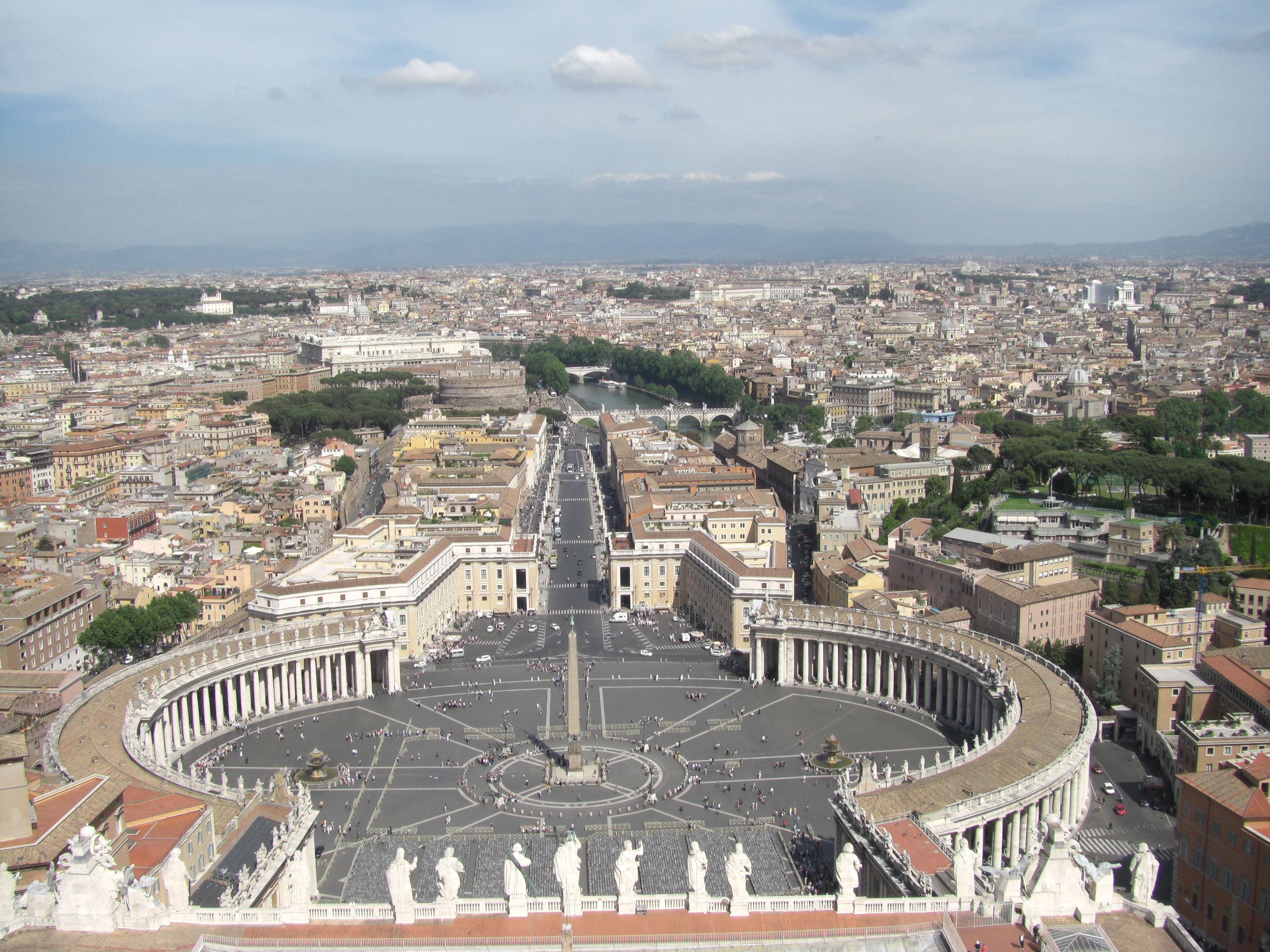
Saint Peter's Square, Vatican

Saint Peter’s Square, seen from the Saint Peter’s Basilica Dome. (Photo, LH Dooley)

The Vatican City State is the smallest country in the world in terms of both size and population.  Its elliptical, quad-colonnaded Saint Peter’s Square is world famous for its architectural beauty, anchored by Saint Peter’s Basilica, as the primary site of the Pope’s outdoor masses and other public appearances.  The Basilica contains relics of the saint for whom it is named after, and is one of the largest churches in the world.  The Vatican Museums have entry lines into the complex reaching for hundreds of meters, if not over a kilometer, on a typical day.

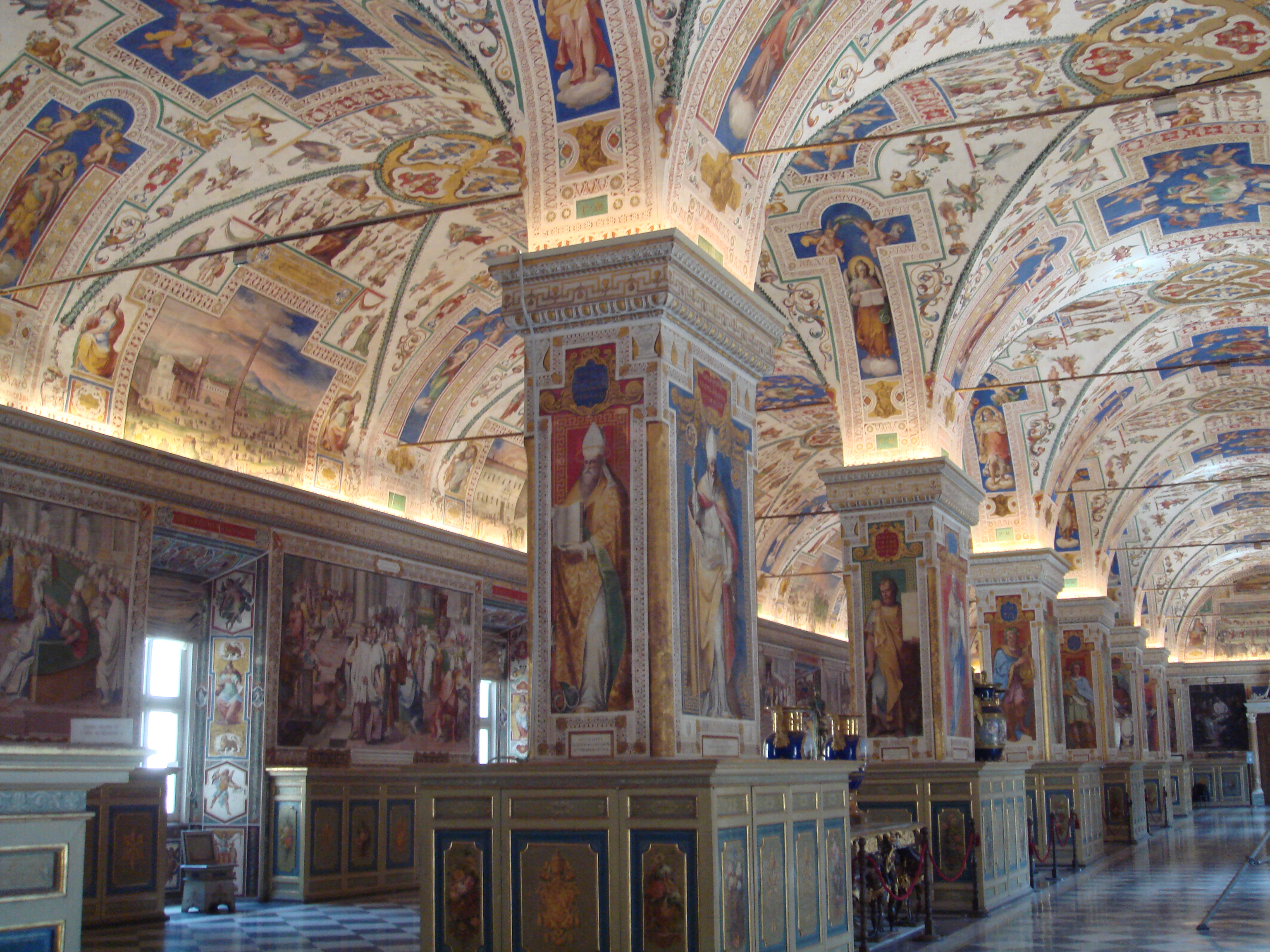
Vatican Museum corridor

Gallery and Corridor in the Vatican Museums. It is in a corridor similar to this that the first attack of the Teutonic Knights of the Aryan Order occurs in The Holy Diamond (Photo: LH Dooley)

The maze of museums can wear out the feet, intellect, and soul alike as one walks through the galleries, sometimes at just a few steps a minute when crowds or lines act as a resistance to forward movement.  Each room, chamber, hallway, nook and cranny is a work of art or a historic treasure – or both at once.  Any one of the dozens of spaces that a tourist walks through would be a masterpiece in any city or country; and any one of the Vatican museum’s ecclesiastical or secular objects would be another museum’s prize item.

And then there is the Sistine Chapel.  I had few expectations when I visited the chapel for my first (and to date, only) time.  I had not read Angels and Demons; and knew nothing about the College of Cardinals or the Papal Conclave.   My only familiarity with the chapel had been its name and the iconic image of God and Adam nearly touching fingers.  When, after a long wait and slow-moving line, I entered the Chapel I was overwhelmed by a host of sensations, stimuli, and emotions; none of which I had anticipated.

First, the room itself was far grander in size and dimensions than I had anticipated.  Photographs of the ceiling tend to be of one small area – again, usually the image of God and Adam.  These photographic zooms always gave me impression that this was the only painting on the ceiling, and that the ceiling itself was not very large.  Calling the hall a chapel, too, left me thinking of something less than enormous.  Chapels fill side apses and corners in Europe’s great cathedrals.  But calling the Sistine Chapel a chapel is like calling Notre Dame of Paris a village church.  The Sistine Chapel seemed larger than most New England churches that I had ever been to.

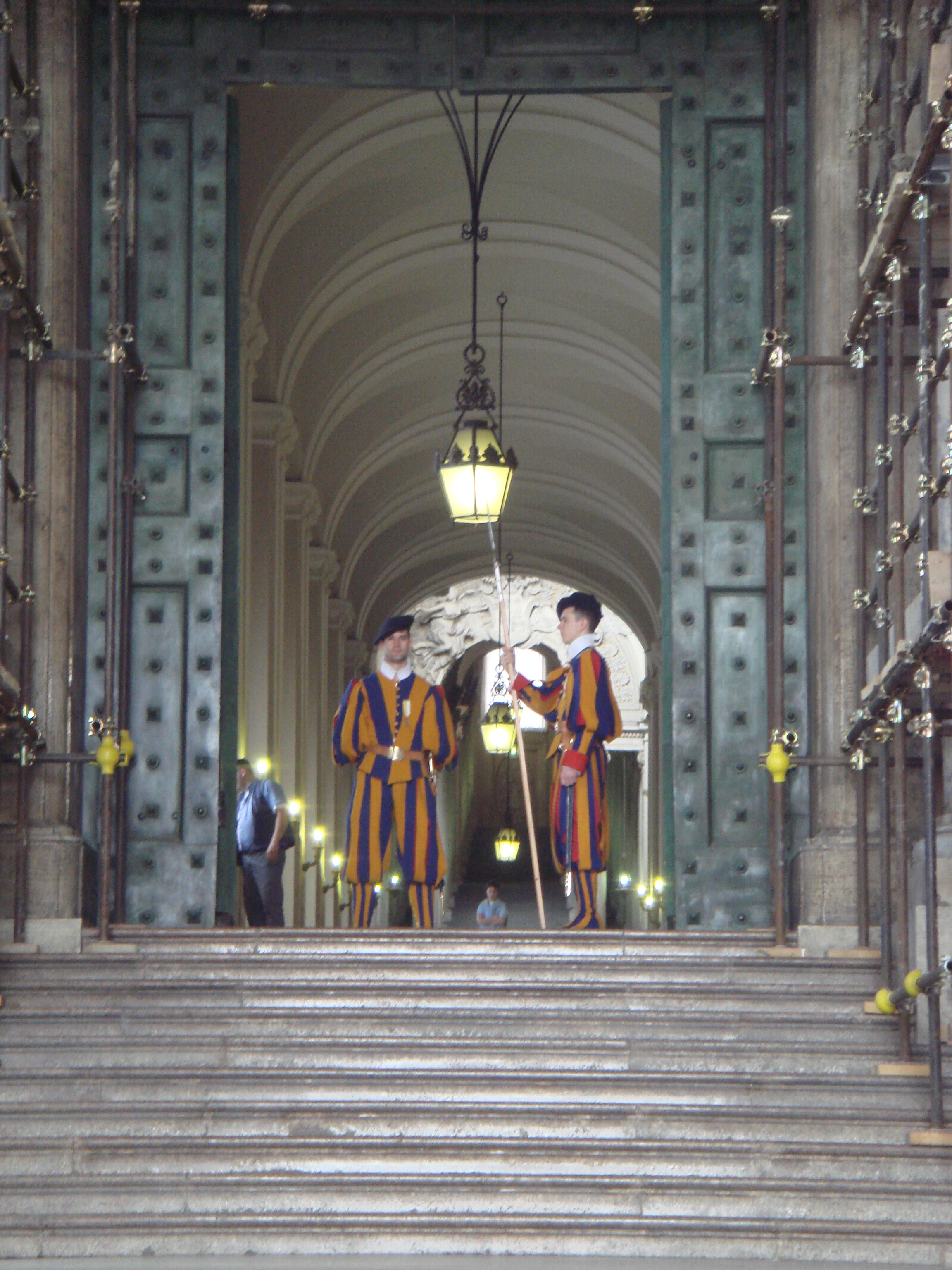
Vatican Swiss Guards


Puffy pants and puffy shirted Swiss Guards of the Vatican. (Photo: LH Dooley)

I was not only awed by the size of the Chapel, but also its height.  Rather than walking into and around the Chapel, one might be better served being rolled in on a stretcher.  The gorgeously painted Baroque ceiling rose so high above me that, as was likely the impression, I felt as if I was looking up to the heavens.  And as much as I was awed by the artwork, my contorted neck was not especially pleased.

As large as the Chapel is, every square inch or centimeter is taken up by tourists.  Tourists bumping into each other, tourists speaking together loudly, and tourists rubbing their necks.  Every half minute, as in the novel, a security guard yelled – louder than any of the tourists whom they were berating – for everyone to be quiet.  In the other half minute the guards would loudly order visitors that photography was not permitted. This is why there are no photos by the author of the Sistine Chapel.

Despite overbearing guards, tired feet, and a crooked neck the Sistine Chapel remains in my mind a world wonder.  The Vatican Museums and the Sistine Chapel are worthy beginnings – or ends – of any novel.

Wikipedia links

Sistine Chapel:

http://en.wikipedia.org/wiki/Sistine_chapel

Vatican Museums

http://en.wikipedia.org/wiki/Vatican_museums

Other links:

Vatican Museums Official website

http://mv.vatican.va/3_EN/pages/MV_Home.html

Posted in Uncategorized | Tagged , , , | Leave a comment

BOOK COVER READY TO GO!

Or how I hired someone to design my novel cover 

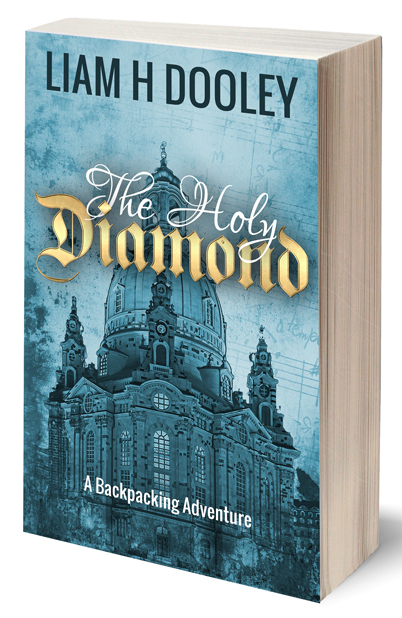
Great news! The Holy Diamond cover is made and ready to go! This includes cover, spine, and back cover. All that is left is to actually have a novel to stick between the covers.

And here is the cover! And the novel in paperback (it’s obviously a mock-up, as the novel has not yet been produced).

 Image             

Image

So, what is involved in making the cover? Did I take a photo, drop it into MS Word, slap on some words, and voila! Instacover?

Or did I go to amazon.com and generate a free cover based on their variety of templates that include layout and stock photos?

No…but these are two cost-free options that I had, as does any aspiring self-publishing writer. As this is my first, grand effort in the field of literary novelization, I wanted to go all out. So I hired a company to make the cover.

You can find out about them here:

https://www.facebook.com/designforwriters 

I sent an initial inquiry, and from there I was put on their workspace web site, where we shared a discussion board with people involved in the cover project.

Here are some of the elements of the cover design process:

  • Provide any relevant photos that the cover might include (I sent some and none were used, partly due to uncertainties about copyright)
  • Provide any design ideas (I did this, sending my second-grader-quality drawing)
  • Answer about twenty questions concerning plot, important scenes, tone, characters, themes, synopsis, etc. Here, I emphasized the theme of music and backpacking adventures.
  • Provide the title, sub-title, and back cover text (this is pretty obvious; though I struggled a bit with the sub-title)
  • Review a bunch of drafts.

Some months, revisions, and back-and-forths later, with kind input from friends and family, we have the final product (above)!

In a world of unlimited resources I might have hired a design artist who would have individually drawn from scratch the cover. But I only have limited resources. This cover uses a combination of designs, stock photos, and who knows what else.

Is it exactly what I wanted? No. But is it better than MS Word and amazon.com templates! You bet!!

Posted in Uncategorized | Tagged , , , | Leave a comment

I’m Unique!

Just a quick, happy note! I’m one of a kind on amazon.com!

Image


Now all Liam H. Dooley needs is a book to create his amazon.com biography.

Posted in Uncategorized | Tagged , | Leave a comment

A Towel to Dry, a Towel to Live (By)

Or, The Joys of Microfiber Towels

Most hostels do not come with free towels.  You can borrow one, and think about how many people have used it before you; or you can purchase one from the hostel reception, probably getting one that is not the right size nor the best “quality”.  And not free. So you you had best bring your own. And of course if you are camping, you only have what you’ve brought.

But not just any towel.  You MUST HAVE A MICROFIBRE TOWEL!  Oh microfiber, where were you my whole life?  Before I tell you about the MFT (my abbreviation for MicroFiber Towel), I’ll tell you about what I had before.

Towel One was a full, body sized towel that took up half of my backpack and more than half a day to air dry.  It seemed to get dirty anywhere within a foot of the floor, and smelled of moisture and other odious perfumes that I’d rather not recall.  If I had to pack and check out after a shower (ie. in the morning), in went the wet towel, stinking up my things and becoming its own mold and mildew farm.  Even were I not checking out, I would attempt to drape it over dusty heaters or hang it on the side of my bed.  But it always seemed to gather more dirt than expel moisture.

Towel Two was a smaller, face-sized towel.  It took up less room in my bag, dried relatively quicker (perhaps three to five hours), and could be more conveniently hung anywhere.  However, within three days of regular usage it was brown with filth.  I was drying 100% of the body with just 15% of the cloth.  By the end of a week’s travel it was a science project.

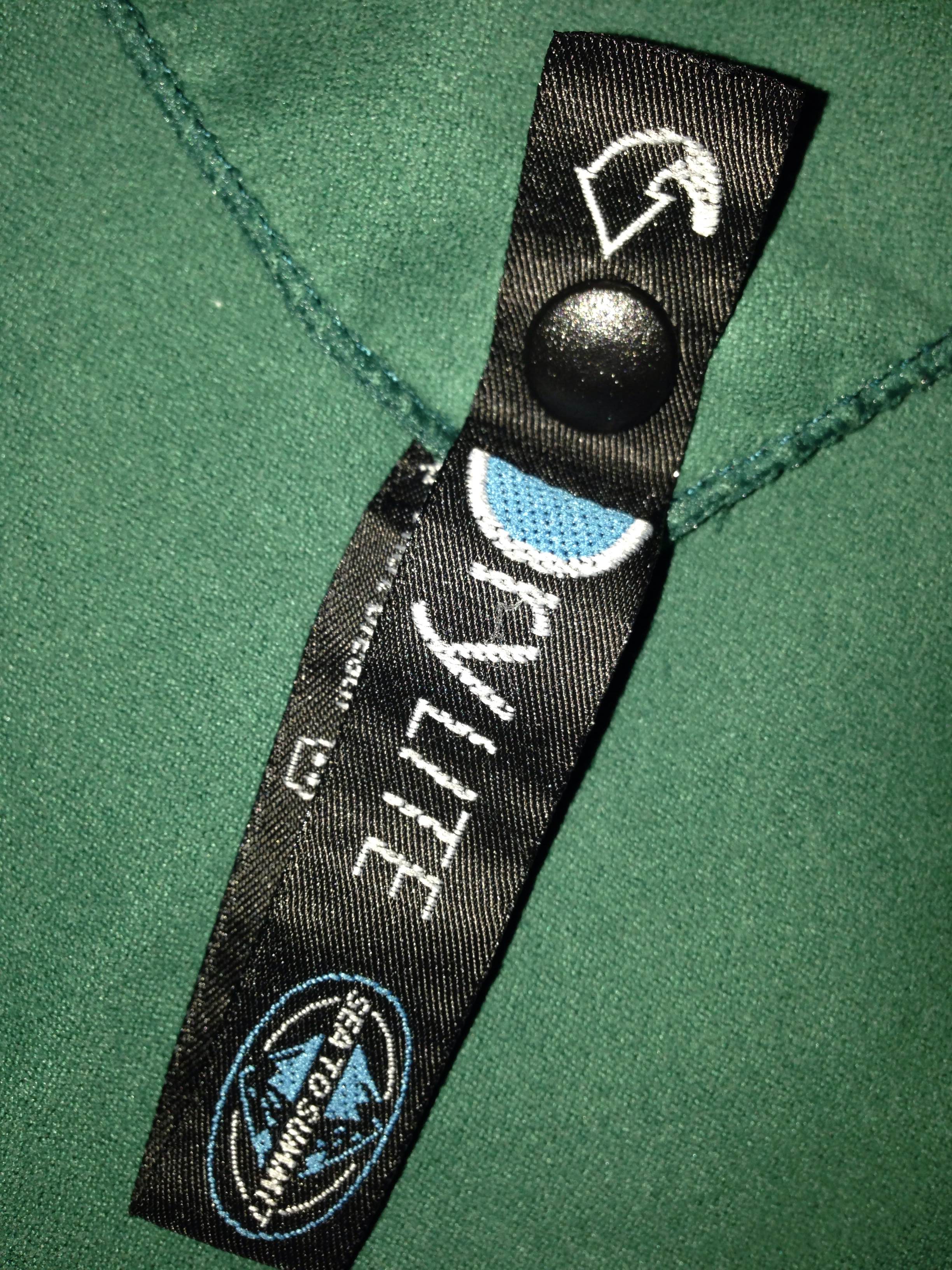
Then I discovered the MFT.  There are actually not too many brands out there that I am aware of.  But the good news is that, it seems to me, they are comparable.  MFT is MFT.  Mine is a Sea to Summit Medium.

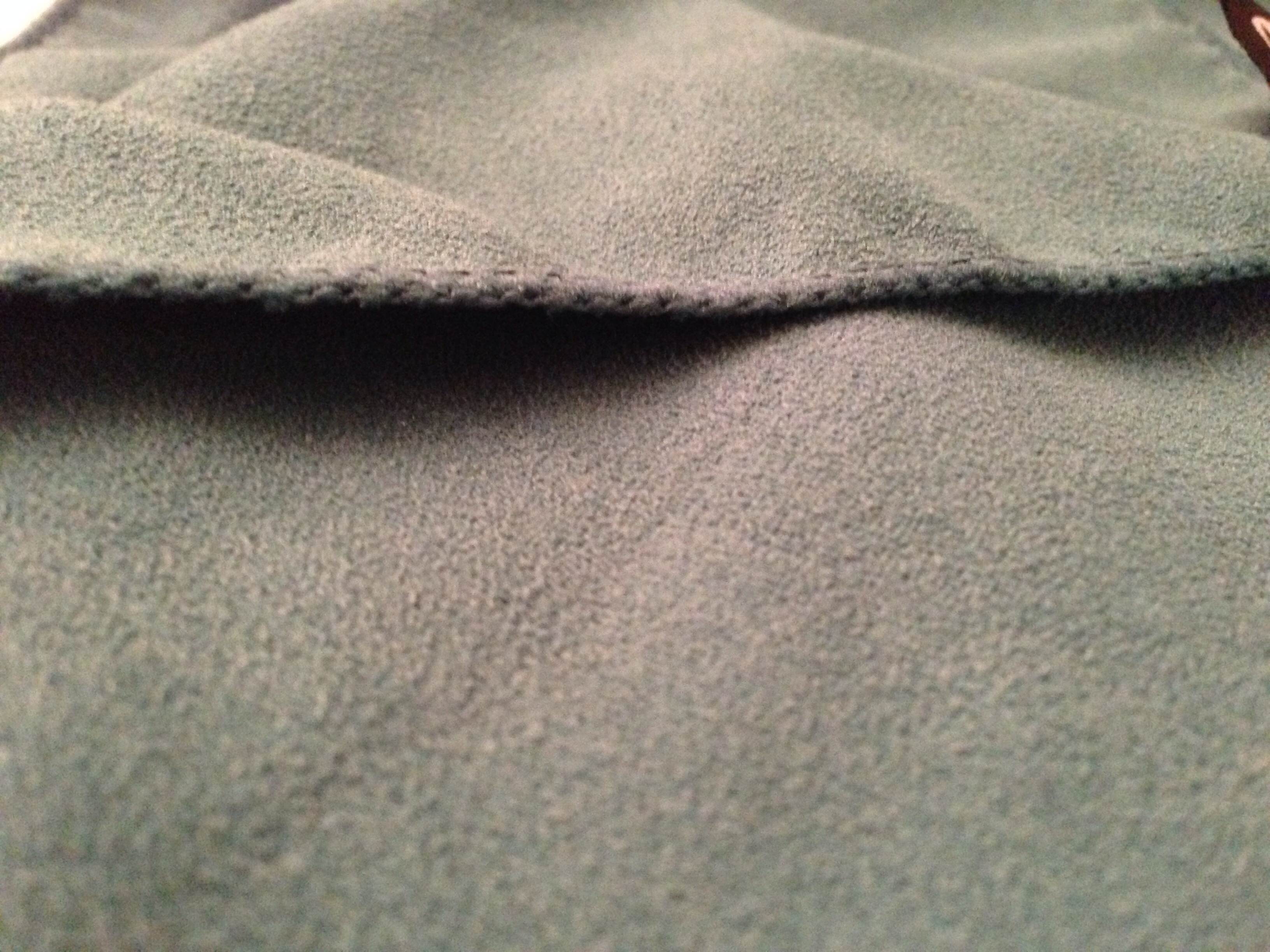
photo2 photo1

These photos show the towel tag, and a close-up of the material’s texture. (Photo: LH Dooley)

So what is a microfiber towel?  It seems space-age and brand new, but I think it’s been for five or so years (according to Wikipedia).  Basically, it is a thin, NASA-like fiber that is designed to fold compactly and dry quickly.  My medium towel is about 75% of a full size towel, but folds into a wallet-sized package.  This is about 20% or less the space of a full size, regular cloth towel!

Second, the towel dries within 20 to 40 minutes, of course depending on where it is placed, how it is unfolded or hung, etc.  If you fold it up wet and stuff it into your bag, it isn’t going to dry.  BUT if you hang it from your bedside, it will probably be dry in no longer than an hour.  If you hang it on a heater or radiator, or in the sun, it will dry in 15 to 30 minutes.  Simply amazing.

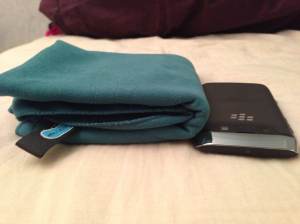
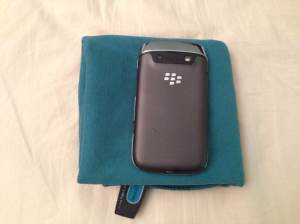
photo4photo3

These photos show the relative size of the towel when folded: not much bigger than a BlackBerry, and not much thicker either (even when not pressed down). (Photo: LH Dooley)

I wouldn’t use this towel at home – regular bath towels are more comfortable. But it’s good for the gym, swimming pool, or anywhere else where portability and efficiency are more important than comfort

BUT DOES IT DRY THE BODY?

Mostly.  You have to pat yourself down rather than wipe yourself dry.  You are absorbing the water – not wiping it up.  So it’s not as comfortable or refreshing but when you have a dry, cleanish towel folded into a small corner of your backpack an hour later, you will be a happy camper – or hosteller.

NO SMELL IS A GOOD SMELL

One last note: the towel neither looks nor smells filthy after a few uses.  Sure, it helps to have a green or black MFT.  But it’s not just an optical illusion; it simply does not retain the grime, odors, and crud that a regular, cloth towel does.

Here are a few links where you can purchase a Microfiber towel. But here’s a tip: the larger the towel, the more water it absorbs but the more space it will take up in your bag.

http://www.amazon.com/Sea-to-Summit-274-DryLite/dp/B001Q3KLE0/ref=sr_1_1?s=sporting-goods&ie=UTF8&qid=1395465167&sr=1-1

http://www.amazon.co.uk/Sea-Summit-Drylite-Towel-Eucalyptus/dp/B001Q3KLEK/ref=lh_ni_t?ie=UTF8&psc=1&smid=A3P5ROKL5A1OLE

Posted in Uncategorized | Tagged , , , | 2 Comments

The Tear of Christ

The myth of The Holy Diamond begins in Jerusalem – heart of the Holy Land of the great, three monotheistic religions of Abraham (Christianity, Judaism, and Islam).  The story of the crucifixion of Christ is well known: his judgment by Pontius Pilate, Jesus Christ’s walk along what would later be called the Via Dolorosa (or Way of Grief in Latin), and finally his crucifixion atop the hill of Golgotha (or the Calvary) which now lies within the Church of the Holy Sepulchre in Jerusalem.

Image

Entrance of the Church of the Holy Sepulchre, Jerusalem. (Photo: LH Dooley)

Mixing the text of the Bible with my own literary additions the history of the Holy Diamond (the relic, rather than the novel) begins during Christ’s crucifixion. Here, Jesus Christ went through his torturous, final ordeal before his mortal death. The pain of death and torture brought his last tear of pain which fell to the sin-ridden earth.  As his soul ascended to heaven the earth quaked and the ground burst asunder.  Where the tear fell, a diamond formed.

Image

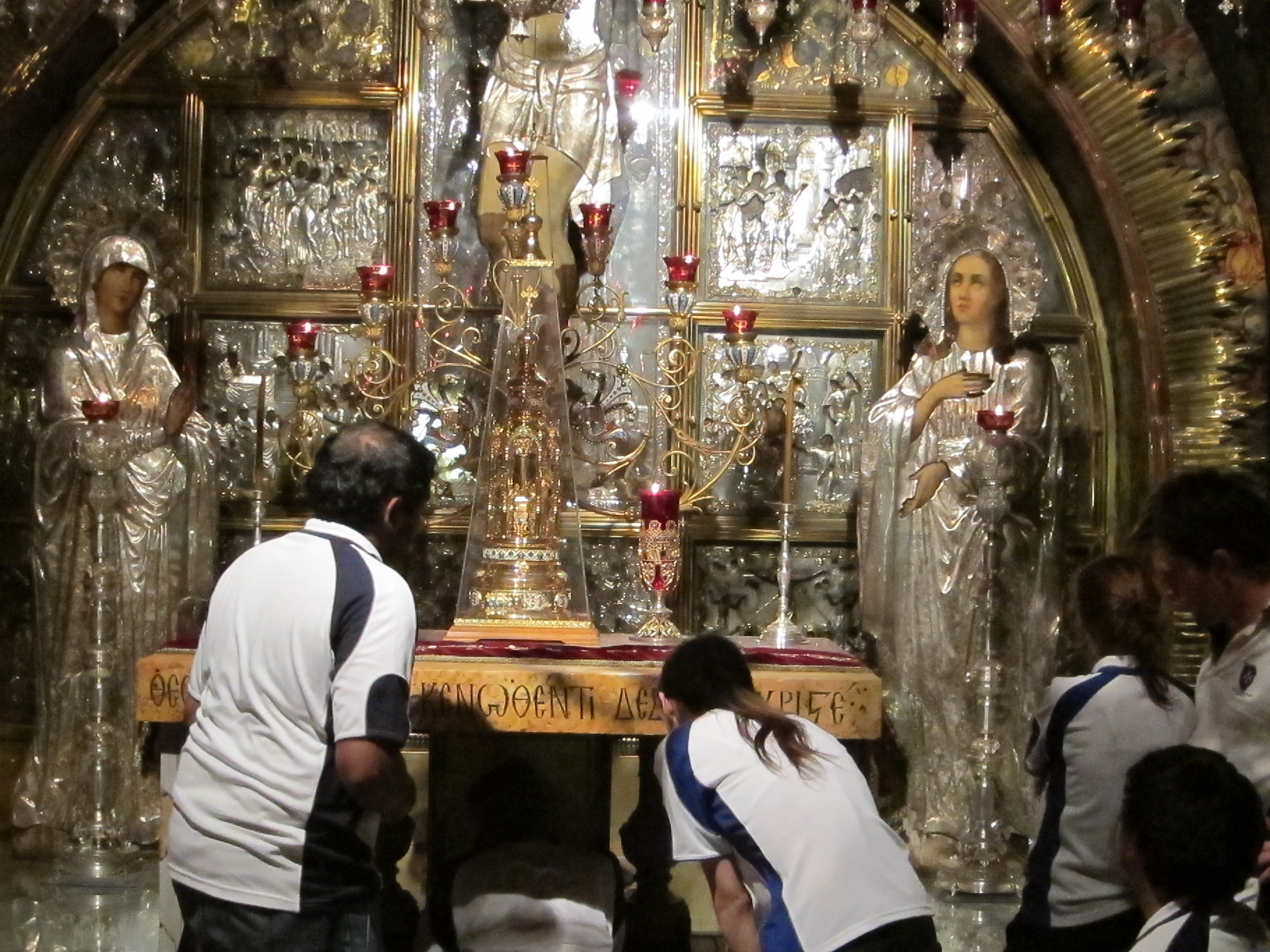
This is where the earth split asunder, beneath the Holy Cross, within the Church of the Holy Sepulchre, Jerusalem. (Photo: LH Dooley)

The Bible itself states:

Jesus, when he had cried again with a loud voice, yielded up the ghost. And, behold, the veil of the temple was rent in twain from the top to the bottom; and the earth did quake, and the rocks rent; Now when the centurion, and they that were with him, watching Jesus, saw the earthquake, and those things that were done, they feared greatly, saying, Truly this was the Son of God.  (Matthew 27:50-51, 54)

The diamond that was created during the earthquake would, in the myth of my novel, become known as the Holy Diamond.

Image

Another view of the spot where the earth split asunder (it is to the bottom right, view obstructed). This chapel is placed where the Christ’s crucifixion is said to have occurred. (Photo: LH Dooley)

In later blogs I will write about who discovered the diamond, when, and how it moved from Jerusalem to medieval Europe.

Here are some Wikipedia links for your deepened knowledge:

The Calvary of Golgotha

http://en.wikipedia.org/wiki/Golgotha

The Church of the Holy Sepulchre

http://en.wikipedia.org/wiki/Church_of_the_Holy_Sepulchre

Via Dolorosa

http://en.wikipedia.org/wiki/Via_dolorosa

Posted in Uncategorized | Tagged , , , | Leave a comment

Wine, but not Women or Song

One of the many famous pieces of by Johannes Strauss II is Wine, Women, and Song.

While reading this blog, you can listen to this piece on YouTube at:

http://www.youtube.com/watch?v=WpKDjzloaLA

or

http://www.youtube.com/watch?v=iiiNRs6Had0

The Holy Diamond has wine, women, song and Strauss!  But in this blog entry, I will talk about wine – which is, after all, one of the key themes of this blog at least if you would judge on the basis of the blog’s title: Wine, Writing, and Wandering.

Wine is one of those funny things, though, that is much better enjoyed in the mouth than by word. Still, I will blog about wines, wine accessories, bottles, etc. Because…wine is good!

In Chapter 24 of the novel, there is a reference to Burgundy wine. Though the cherry-red Burgundies, or Bourgogne in French, do not figure prominently in the novel, these are my favorite wines; and among the most expensive in the world if you exclude champagne.

Burgundy wines come from the old kingdom of Bourgogne, which is more or less self-evident. This kingdom was once more or less independent and, in some ways, is best known for having captured and handed over Joan of Arc to the English for burning at the stake.

Gone are those days, but with us today remain fine wines. The region itself in which the grapes are grown lies more or less north of Macon to Dijon in Southeast France, northwest of the Alps. The Bourgogne wines are known for their lighter red color compared to Bordeaux wines or most New World wines (California, Australia, South Africa, etc.); and have a fruitier flavor without being sweet and “weak”.

I did not count, but I’m sure I drank many a fine Bourgogne wine while writing my novel. It’s hard to go wrong with these wines, though finding them can be a bit of a task. Cost? Well a typical bottle of Burgundy is fifteen to twenty-five US dollars; but even a five-year old Bourgogne can cost as little as one hundred US dollars, especially at a restaurant.

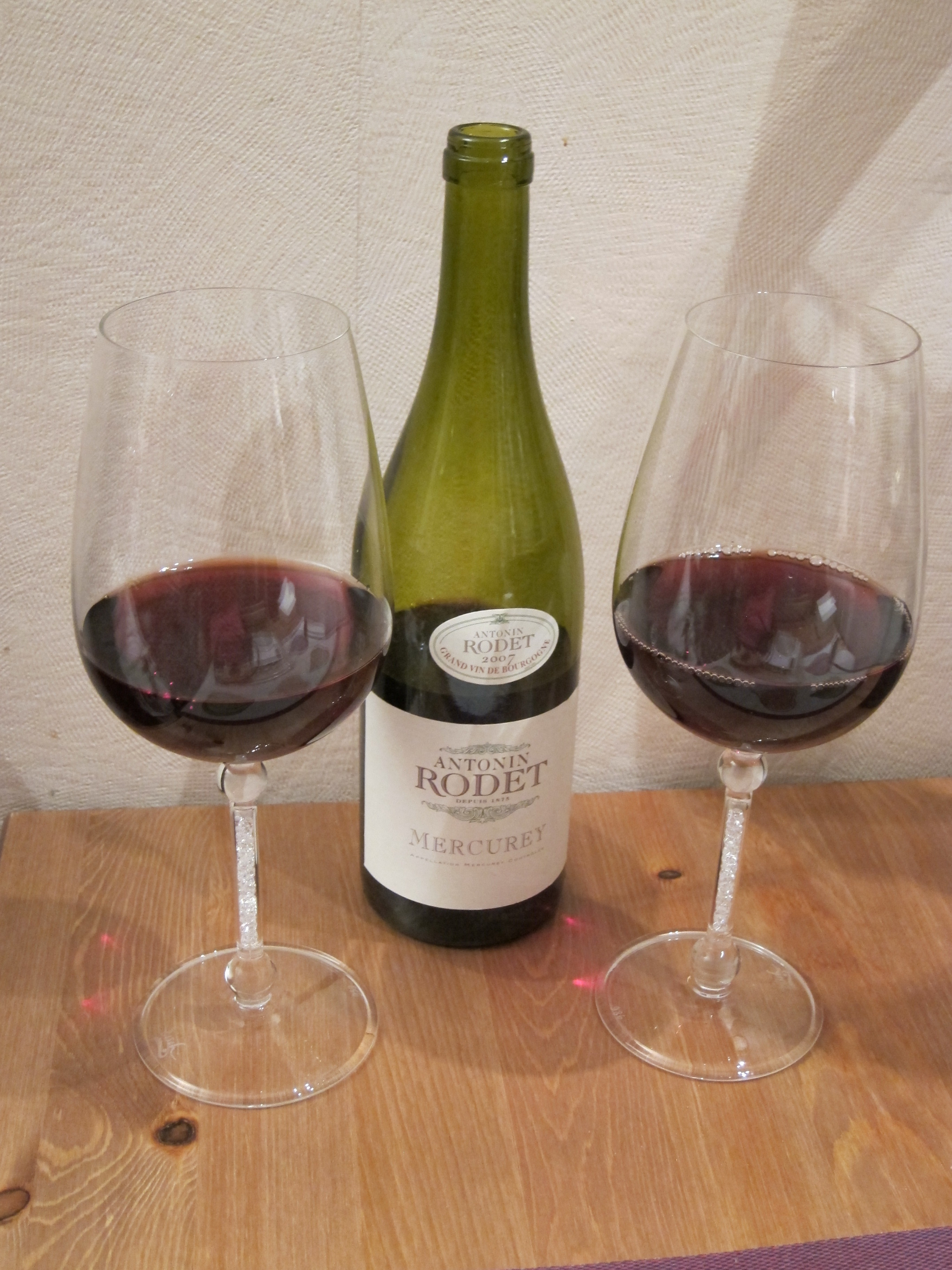
Here is a photo of a bottle of Burgundy/Bourgogne. It’s of a Mercurey; you can find out a bit about the region/wine here:

http://en.wikipedia.org/wiki/Mercurey_wine

The photo here is of a bottle I drank at home – and note the beautiful, decorative glasses made by the German company Eisch.

Mercurey Wine Bottle

Cheers to finding yourself your own fine Bourgogne bottle of red!

Posted in Uncategorized | Tagged , , , , , , , | Leave a comment

The Best Backpack for Backpacking

The Alpine Lowe Carry-On TT-40 Backpack

Now, to put aside my writing life, I’m going to talk a bit about my favorite backpack as part of my “Wandering” component of my blog title (Wine, Writing, and Wandering, in case you forgot). 

Traveling is more than museums and monuments.  Unless you have servants and a baggage train staffed by footmen and royal guards, you are going to need to carry your own clothes, electronics, toiletries, books, and souvenirs.  Perhaps one of your books will be The Holy Diamond (sorry, couldn’t resist the plug-in).

My bag is the Lowe Alpine TT Carry-on 40.  It is an AMAZING bag for my personal needs.  Why?  Well of course I’m about to tell you…

I HATE checking bags.  HATE HATE HATE.  Say what you wish: Haters gonna hate.  I’m a bag-checkophobe (though I have nothing against Czechs).  Hate leads to the Dark Side.  Hate is Evil.  I don’t care.  I HATE CHECKING MY BAG ON THE PLANE.  Why?

First, there is nothing worse than landing after a long, all-day or all-night flight, standing at the baggage pick-up belt, watching it monotonously moan and mumble as you stare at bags pass by you, and then hearing the silence strike when the conveyer belt as it stops.  It’s empty – or nearly.  And your bag is not there.  And it’s not coming.  You’ve just lost 30 minutes of your life –if you’re lucky – for nothing.  Now you have to wait in line to file a missing bag form, and figure out where to have it delivered.  Just hope for your sake that you know where you will be for the next 48 hours.  And you probably won’t be able to go anywhere else.

Second, even in a world where you get your bag without any problems, you are still likely to wait around for it.  Yeah, it’s a great victory when you get yours first or within the first ten, but statistically you are as likely as not to wait for a while.  This isn’t my favorite way to start or end a trip.

So what about this bag?  Well, it’s the biggest bag I could find that didn’t have wheels (which take up more space within the bag) and that I could carry-on (thus the name, of course).  The “40” in the name is derived from the fact that it is a 40-liter capacity bag; or 2600 cubic inches.  This bag crunches well and is able to fit into most overhead luggage compartments.  It’s almost never refused as carry-on (unless you have an especially difficult airline bag check boarding-pass issuer, or the plane is actual tiny).  And it holds a good amount.  I can carry a suit and dress shoes and about 5 days of casual clothes, or some 10 plus days of only casual-travel clothes (business attire takes up way too much luggage room).

An additional bonus – and for me selection criteria – is that this is a backpack.  One hundred percent.  It’s not a duffle bag, it’s not a rolling bag, and it’s definitely not a self-propelled bag.  It’s a backpack.  That means I can, by definition, carry it on my back, which frees my hands for map reading and photo taking, and makes it a lot easier for me to sprint at high speeds to catch planes, trains, and automobiles.  I can even wear it while riding a bike!

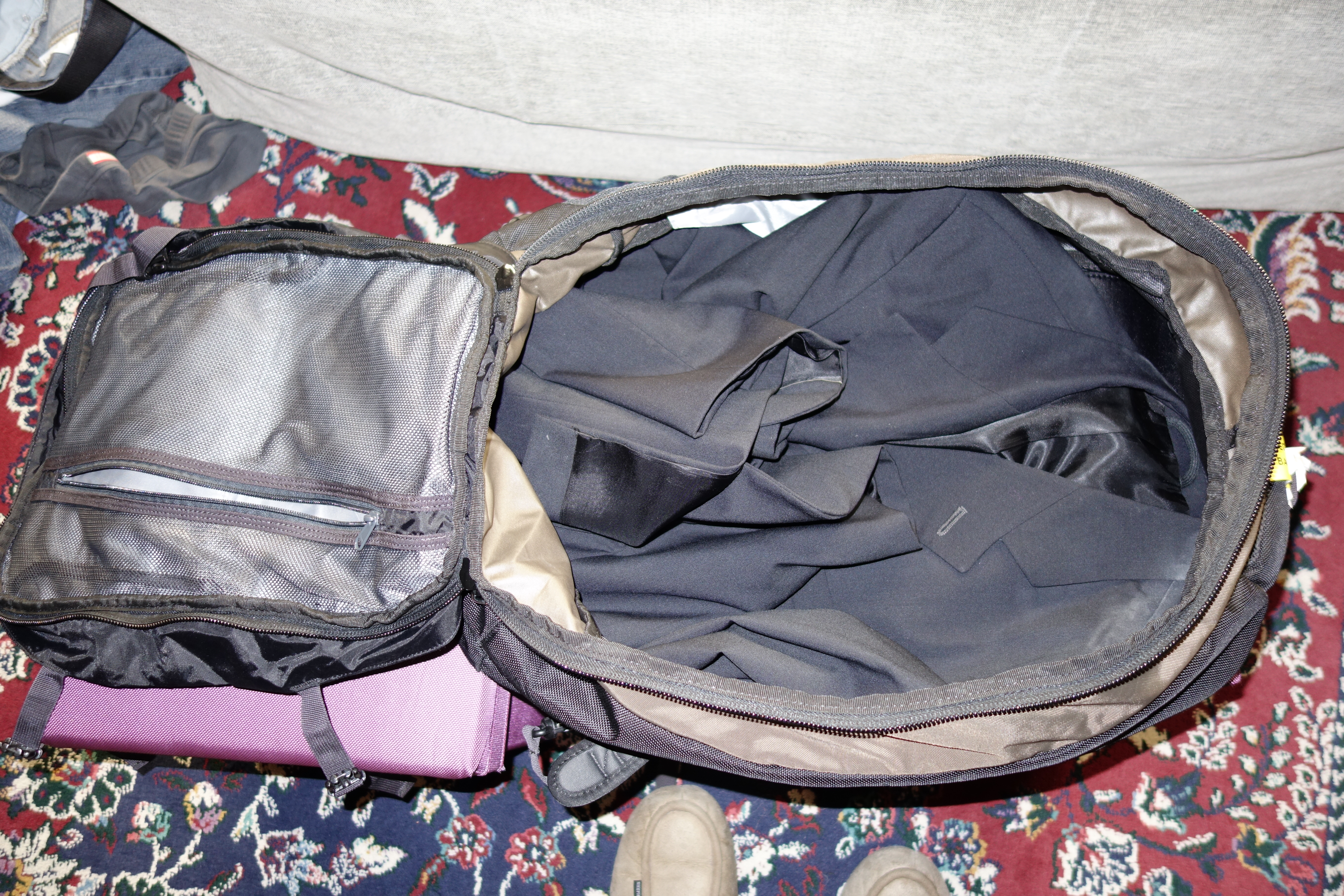
One thing I like about this bag is that it opens nearly all the way.  That is, it does NOT open only at the top, but more like a suitcase.  This makes it much better for me to access all of my clothes without taking them out to get to the bottom; and it’s easier to put in my work clothes – suit and dress shirts – into the bag in such a way that they remain flat.  I don’t need to stuff them in from the top and crush them downwards as other bits and pieces pile up.

Alpine Lowe TT-40 side

This bag has padlock joints on the zippers, a side and top cushioned handle, and is a nice, neutral gray color.  I don’t look like I’m leading a color parade, and I don’t look like I’m a SWAT team member.  I like colorful parades and being on the SWAT team as much as the next person – but not while traveling (editorial note: while The Holy Diamond doesn’t have any parades, it does have a SWAT team or two.  Sorry for the second, irresistible novel pitch).

The attached photos show the bag’s relative size (Kindle put on the bag for size reference); and I folded a suit jacket and put it in the bag so you may see how it fits.

DSC00042

I love this bag so much that when it was stolen on a train ride in Belgium, I immediately ordered another of the same model within a day.  I should even give it a girl’s name!  Any ideas???

Alpine Lowe TT-40 outside full

Here are a few web links for the TT Carry-On 40:

Lowe Alpine

http://www.lowealpine.com/tt-carry-on-40

Amazon.co.uk

http://www.amazon.co.uk/Lowe-Alpine-TT-Carry-40ltr/dp/B001V5O450/ref=sr_1_1?ie=UTF8&qid=1367850278&sr=8-1&keywords=lowe+alpine+tt+carry+on+40

Amazon.fr

http://www.amazon.fr/Lowe-Alpine-Carry-On-Graphit-Phantom/dp/B003DEQNU6/ref=sr_1_1?ie=UTF8&qid=1367850350&sr=8-1&keywords=lowe+alpine+carry+on+40

Posted in Uncategorized | Tagged , , , | Leave a comment

February 2014 Update!

So, I had originally planned to self-publish The Holy Diamond in summer 2013, but I became convinced by an editor that the novel needed a proper, full edit. While I was, like any author, inclined to convince myself of my own brilliance and self-righteousness, I gave way to good advice and cool-headed thinking, and went ahead with having a full-novel edit.

What does this involve? Everything from fixing characters, plot, removing redundancies, length…down to periods and commas. Really everything! I’m nearing the end of the edit process now, and then I only need to:

  • Do one last proof reading
  • Design the cover (which I have hired out for)
  • Finish the non-body text parts such as acknowledgements, copyright, etc.
  • Get the novel formatted for a half dozen e-formats and softcover
  • And finally, set up all of the online sales accounts (which I have never done before).

I the meantime, I hope to continue my global travels to undisclosed locations.  In the meantime, here is photo of Nuremburg, heartland of The Holy Diamond. This is the first thing I saw when I arrived in the old capital of the Holy Roman Empire, and the first photo I took.

PROST!

Nuremburg Entry, Round Tower

Posted in Uncategorized | Tagged | Leave a comment